Why I Am (Perhaps Not) an Evangelical
Jesus loves Darwin Biophysical soul Read against the machine

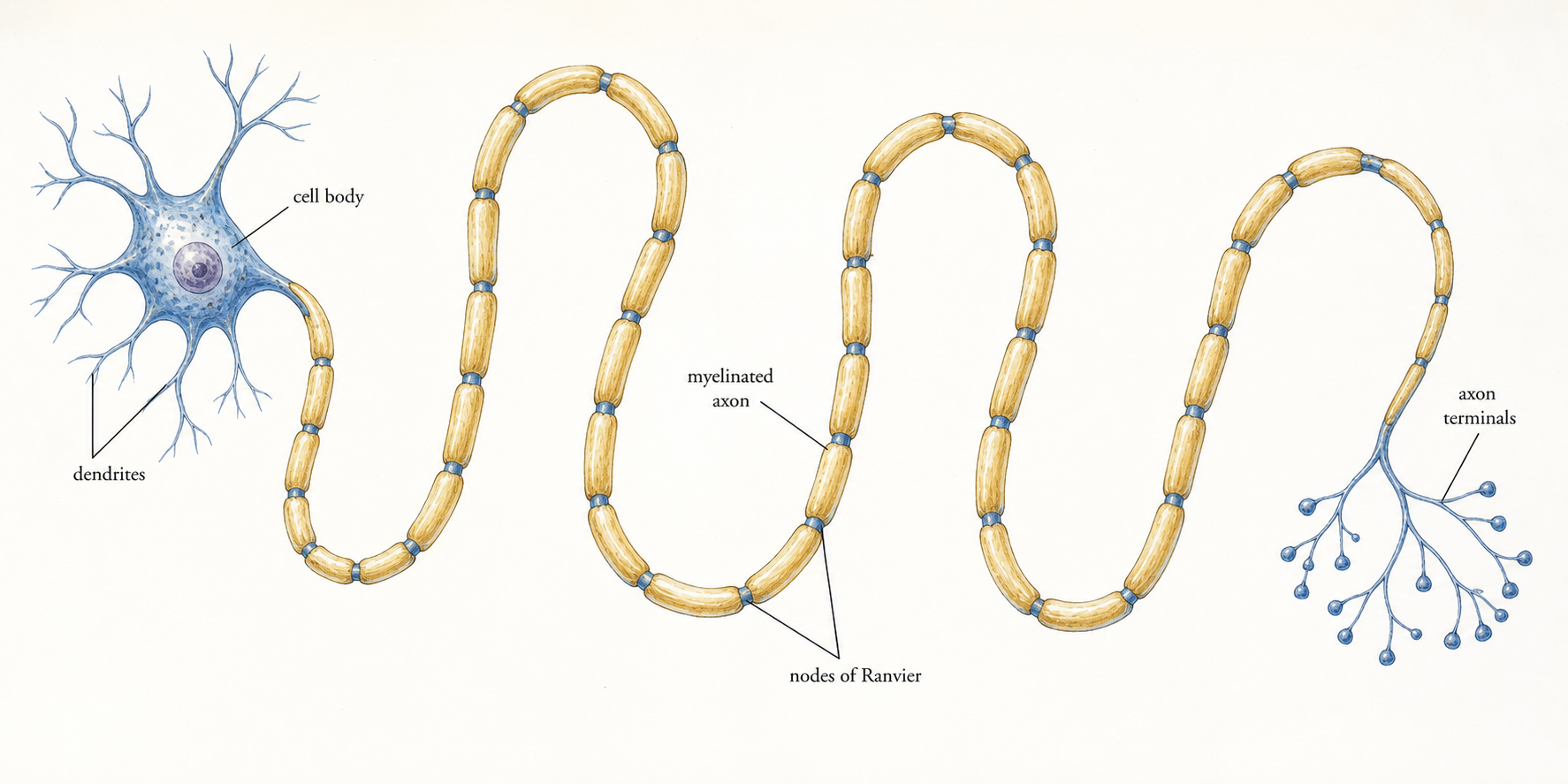
I have always loved science and math. I have a vivid memory of a motoneuron with a myelinated axon that wound back and forth across the centerfold page of a beloved childhood science book. I was an avid reader of Martin Gardiner’s “Mathematical Recreations” column in Scientific American. My favorite authors were Carl Sagan, the astrophysicist, and Stephen J. Gould, the evolutionary biologist. In first grade, while building a model rocket, I cut my thumb with an exacto-knife razor blade. My mother says that I cried, not because of the pain, but because “I couldn’t see my cells.”
My family of origin and my childhood self were atheists and secular humanists. We believed that “organized religion” was largely responsible for the world’s bigotry, hatred and violence. I still believe that people “never do evil so completely and cheerfully as when they do it from religious conviction.”
One of my first exposures to evangelicalism was in fifth grade. A friend invited me to his church. I was a curious young atheist who was interested in seeing the inside of a church. My mother was inclined to let me go, based on her conviction that children should make their own choices with regard to religion.
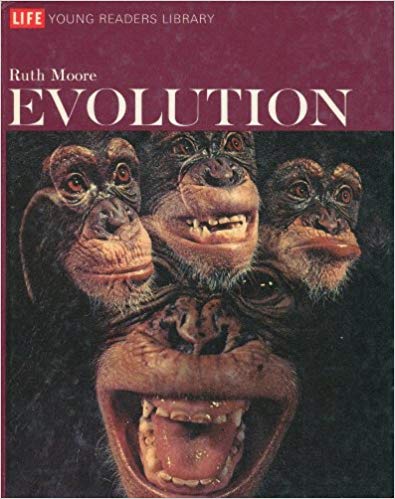
During Sunday school at the Church of the Nazarene in my hometown, the biblical stories of creation and flood were discussed. Having recently read a Time-Life Young Reader’s book on evolution, I asked many questions. I have a vague memory that my questions were not well received, and a certain memory that they were not well answered. Later that week, I learned that the Sunday school teacher was giving her pupils five dollars for every friend they brought to church.
I remained an atheist until my early twenties.
I was rushed by Lambda Chi Alpha fraternity during the Fall 1982 orientation week at M.I.T. (the Massachusetts Institute of Technology in Cambridge). A few months later, I was surprised to learn that several members of my pledge class were committed Christians.
These friends were a sort of existence proof to me. I could no longer assume that Christian belief was ruled out by intellectual achievement. At minimum, it could not be denied that some committed Christians were competent enough in technical matters to be admitted to M.I.T. Some of these “brothers” and classmates cared about their education and got good grades. I could no longer doubt, as I may have done in high school, that many intelligent well-educated Christians existed.
On the other hand, most of the students I met at M.I.T. were majoring in electrical and mechanical engineering. For them, an M.I.T. education was not an exploration of mathematics and the sciences for their own sakes, and certainly not a pathway into the empirical and philosophical truths of science. Rather, M.I.T. would provide a technical degree, to be followed by an entry level position at Intel, the N.S.A., or Citibank (e.g., as a venture capital specialist, or analyst of currency exchange markets). This instrumental view of education was far removed from my own Bachelors of Science, which was more liberal and humanistic.
While an undergraduate at M.I.T., I asked questions of my Christian friends about science and faith, but seldom heard anything helpful. The deepest comment was spoken by a friend of a friend who was a leader in Campus Crusade for Christ. “The more I learn about science, the more I appreciate the intricacy of God’s Creation.” As a molecular biology major who was well-read in evolutionary biology, this remark was understandable, but unsatisfying, because it sidestepped the many arguments against Christian belief that originated from the scientific worldview.
After my parents divorced in Junior year, my desire to learn transformed into something that religious friends described as an intellectual or spiritual search. For the following two years, I read any book that appeared deep or significant, fashioning myself after Larry Darrell in The Razor’s Edge (a novel by W. Somerset Maugham). As my spiritual search drove me to read beyond science, I found it remarkable that over the course of two years, no assignment had required a visit to the library. I found the library to be a remarkable place, and spent many evenings doing unassigned readings in psychology, philosophy, and intellectual history.
Friends noticed my search and inquired. Some prayed for me, invited me to group studies of scripture. One gifted me an NIV bible and politely challenged me to read it as part of my seeking. I did so during the semester after I graduated, because I recognized that I did not know what it contained. In fact, the beginning of my conversion was simply the realization that I was far too sure that Jesus wasn’t the Son of God. For some time I had been questioning everything in my life, up to and including the possibility that genuine love existed. I tragically sabotaged one friendship or romantic relationship after another. It has occurred to me that—given the seriousness of my questions over life’s meaning, and the lack of any real knowledge of the tenets of faith—I was far too confident about one particular thing: that Jesus wasn’t God.
I read the Bible and experienced it to be like no other book. At first it was incomprehensible, but one day a verse spoke to me: “blessed are the pure in heart, for they will see God.” I didn’t know what pure in heart meant, but whatever it meant, I knew that I was not.
During the summer after graduation I took a bicycle tour of the northwest with three friends from my fraternity, two of whom were evangelical Christians. There are a number of stories I could tell at this point, for example, an extremely memorable and probably miraculous answer to my first prayer to Jesus himself, as well as several “divine appointments.” But rather than give you my entire testimony, I will recall one early event.
One day I was sitting next to my friend eating lunch overlooking a lake with a beautiful view of a mountain before us. As I considered the beauty of that mountain, I thought of the uniformity of natural law and the wonder of geological time scales. I said in my heart, “Look at this mountain! How could anyone believe that God created the world?” Moments after I had this thought, my friend turned to me and said “You know, it’s at times like these that I am most sure God exists.”
This amazed me. We were both looking at the same mountain! How, I wondered, could this one mountain simultaneously confirm my atheism and his theism? What accounted for the radical difference between his perception and my own? Was there perhaps some distinction in our inner being, a spiritual difference, some matter of the heart into which I had not yet been initiated?
I was baptized several months later. Since that time, for the last 20 years, I have attended evangelical churches. First, as a graduate student, next as a post-doc, and now as a faculty member. I was married in an evangelical church. After my divorce, I took refuge in an evangelical church. I believe in Jesus. I believe in miracles. I enjoy sharing my faith. So, I suppose, I could identify as an evangelical Christian, if I wished to do so.
Why am I perhaps not an evangelical? Why am I uncomfortable with the label and qualifier evangelical? Because when I came to Christ, I was politically liberal, a biology major at an engineering school, and a free-thinker. And now, 20 years later, I am a Christian version of each of those things. I’m politically progressive out of Christian conviction. I am a professional scientist who hopes to glorify God through his work. And I am thoughtful about my faith.
When I believed in Jesus a relationship with God began, but it is not as though I had a brain wipe when I accepted Christ. These and other aspects of my personality were redeemed—or began to be—but they were not eliminated or transformed into their opposites. And these three aspects of my personality seem antithetical to the evangelical way, at least, contrary to the populist consensus of American evangelicalism.
I’ll talk briefly about each.
1. Politically Liberal
In most evangelical churches there is an assumption that to be politically conservative is part and parcel of being a Christian. But I was born in Berkeley, California, to parents who pushed me in a stroller as they marched in the Vietnam War protests. There were two unforgivable sins in my family. One was pointing a toy gun at a human or animal; the other was eating sugared cereal. I was a liberal before I believed in Jesus. After my conversion, I did not become a conservative, I became a Christian liberal.
Admittedly, as a new Christian, I was suggestible. I tried for a time to be politically conservative, because I thought I was supposed to, but it didn’t take. It’s just not who I am. Nor could I find the religious right’s perspective in the bible that I studied and read devotionally. As a mature Christian, I am repeatedly astonished, troubled and grieved by the conflation of politics and Christian belief in the American evangelical church. Of course, there is a Christian left, e.g., as represented by Sojourners magazine, but we are outnumbered. In any case, I would not advocate substituting left for right in the church.
Faith in Christ is not a political ideology. American evangelicalism is being misled on this point.
2. Scientist
As I entered graduate school, learned more about science, and read Christian theology as a believer, I had many questions about the social controversy over evolution. I found that there were few moderate voices—or even informed voices—in the evangelical churches I attended.
This was very troubling to me, because when I became a Christian, my evaluation of the evidence for evolution did not change. Rather, what changed was my perspective on—my interpretation of—the facts and theory of evolution. As God revealed to me that He was Creator, I began to interpret the history of life on earth differently. I began to see the long history of life on earth as a manifestation of God’s providence, creativity, diversified unity, and patience.
During that bicycle tour when I was a seeker, I could only see one mountain; now I see both mountains.
People like me refer to ourselves as “evolutionary creationists,” as opposed to young earth creationists, old earth creationists, progressive creationists, or intelligent design advocates. And because evolutionary creationism is currently a minority position in the evangelical church, I am often uncomfortable.
Many aspects of science that evangelicals often struggle with do not compute for me. One example is the dismissal of evolution on the basis that we could not have gotten here through a random process. Such comments confuse me, because evolution is not a random process. Evolution has always been conceived of as a combination of chance and necessity.
In what sense is evolution random? Only in this sense: to the extent that we can observe genetic mutations (an important evolutionary phenomenon that can be observed and/or inferred in the genomic sequences of different organisms), these mutations do not appear to happen with the adaptive significance of the mutation for the organisms somehow “in mind.” Rather, adaptive traits appear to result from a process of selection.
Or perhaps “random” refers to the recognition that the evolutionary story involves a large degree of historical contingency, e.g., the extinction of the dinosaurs leading to the adaptive radiation of mammals? In any case, the philosophical significance that most evangelical Christians attach to “randomness” and “contingency” in evolutionary biology does not compute for me.
If something is random, does that mean it cannot be understood, that there are no laws governing the possible outcomes? Consider the laws of thermodynamics governing the air in this room. Underlying these laws are the chaotic dynamics of molecules bouncing off one another, dynamics that we will never be able to predict, because we could never establish the initial state. Nevertheless, we can think statistically about these ricocheting atoms. This perspective is known as the kinetic theory of gases, a theory that assumes deterministic Newtonian laws of motion, but is nevertheless statistical in nature. And underlying that theory we have quantum mechanics of the electron orbitals that cause the molecules of the air to bounce off one another. Quantum mechanics is inherently—fundamentally—statistical in nature, yet the equations for the wave functions are deterministic, and so on.
My point is this. What if there WERE laws that could be associated with the “random” process of evolution? We already know some of them. What if we understood all of them? Well, in that case there would be a large number of evangelicals concerned that the determinism of evolution implies “no role for God.” This is, in fact, precisely what Newton and other Christians worried about long ago, during an age when the clockwork view of the universe dominated science.
And guess what? If we understood “evolutionary law” completely, then the new atheists would be saying that the determinism of this theory meant that the universe had “no need for God,” because we HAD to arrive here as intelligent organisms, given sufficient time.
But from the perspective of spiritual discernment this is an absurd state of affairs! “Random” and “deterministic” are opposites of one another. How can both types of scientific theory generate concern among evangelicals (or triumphant glee among atheists) that there is “no room for God”?
3. Free Thinker
Perhaps that soap box I was just on gives you a sense about what I mean when I describe myself as a free thinker. My perspective on the science faith debate, as a professional scientist and relatively well-read amateur theologian, is that almost everything you hear and read with regard to the social controversy over evolution is baloney.
The majority of participants in the creation-evolution “debate”—on both sides—are grinding an axe. Most writing—by evangelicals and atheists alike—on the subject is misleading with regard to either the science or the supposed theological implications of the science. Demagoguery abounds.
Atheists pride themselves in being “free thinkers” who do not submit to dogma. Is there a Christian version of this? Can one still be a free thinker, but have a mind submitted to Christ, an ear that listens to what the Spirit says in the Word of God? I think so. This situation is the intellectual version of the paradox that “obedience brings true freedom.” Karl Barth said: “Free thinking with authorities, this is the way!”
As a Christian who is academically inclined, free thinking has meant a perpetual search for pure doctrine. Where can one find scientific truth that has not been overloaded with philosophical presuppositions? Where can one find theological and biblical truth, that isn’t stuck in the muck of rationalism, or defensively reacting to Scientism, or dependent upon studied ignorance for its viability?
It took me a very long time—a lot of reading and self-study—to discover Christian voices that I could trust. It turns out that there are thoughtful people, and helpful voices. I am so thankful for them! But don’t look for them in the Christian bookstores! If you are academically inclined, you might hurt yourself there. :-)
For me, the helpful voices are most often academic theologians, scientist-theologians—whether evangelical or not—and certain philosophically minded and thoughtful authors—whether Christian or not. In fact, because I’m an academic, reading Christian theology is a devotional experience. This reading does not substitute for prayer, bible study or worship, but I need this larger community of Christian academics for intellectual fellowship.
So … I am evangelical, I suppose, when I speak or write, when I demonstrate my faith through love. But I am uncomfortable with the label evangelical Christian, because evangelicals tend to be conservative, afraid of science, and prone to let others think for them.
I am not a doctor of the church. I’m not a theologian. But I want to end with an exhortation of sorts.
I recognize that acceptance of evolutionary biology opens up a set of thorny theological issues related to biblical authority, hermeneutics, and so on. But, to be frank, as a scientist I must insist that these are not my problems; rather, these are problems for evangelical theologians, many of which are problems of their own making. The question of what evolutionary biology means for biblical authority, hermeneutics, the doctrine of man, etc., will remain unanswered until there is more engagement between church leaders and believing scientists and other academics.
It is very interesting, in fact, to behold how the American evangelical church holds up certain scholars—I am thinking here of major figures such as C.S. Lewis or Alister McGrath or John Polkinghorne—as proof that one can be an intellectual as well as a Christian, but then essentially ignores the perspective that such people bring to complex issues such as the relationship between scriptural authority and the “general revelation” within which modern science plays such a significant role. John Goldingay of Fuller Theological Seminary said, “Reality is complex. The fact that Scripture is divine revelation does not make it less so.” Amen!
Or perhaps I should put it this way: I am a Christian and a scientist who is increasingly uncomfortable with the label “evangelical,” because the oversimplified positions taken by the evangelical consensus make it ever more difficult to share the gospel with the people I care about most: scientists, academics, and the coffee shop crowd.
I think that the evangelical church needs to ask: Are we meeting spiritual resistance in the form of disbelief—in which case we need to push forward—or are we talking in a way that is simply does not make sense, because what we are saying can easily be demonstrated to be false?
The evangelical church needs to share the gospel of historic Christianity and not the peculiar, reactionary, and often obscurantist worldview of American evangelical subculture. The gospel is in some sense “unbelievable”—the Good News still strikes me as too good to be true—but the gospel is not “intellectually untenable.”
Because Jesus is the Truth, you can be sure that you do not have to choose between loving God with your mind and loving God with your heart and soul. Free thinking with minds submitted to Christ. This is the way!